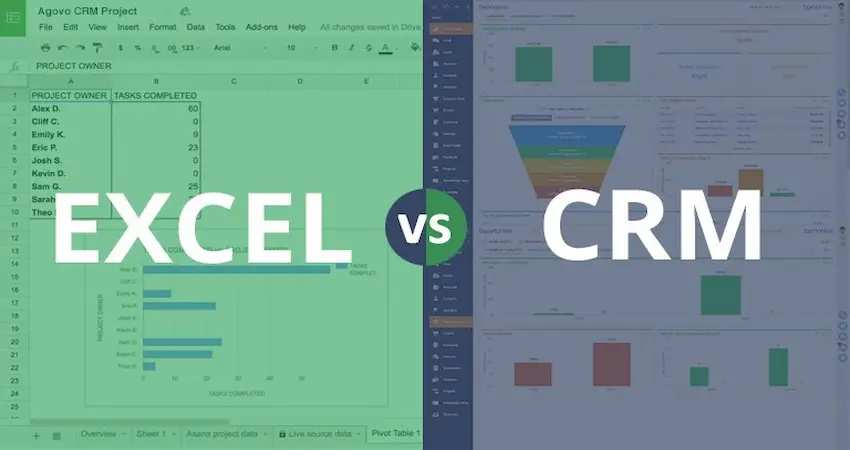
- WhatsApp and Excel are not a sales system. They are organized chaos that works until it does not. And when it stops working, it stops working fast.
- Every audit reveals the same four problems: no real-time pipeline visibility, follow-up that depends on personality not process, deal history that walks out the door when reps leave, and no data to improve from.
- The three excuses we hear constantly are all wrong. "Too small for a CRM" (you are exactly the right size). "Team will not use it" (a setup problem, not a people problem). "Tried before, did not work" (an implementation failure, not a software failure).
- The fix starts before the software. Map the sales process first. Build it in the right tool second. Walk the reps through it until it becomes how they work, not extra work on top.
- Every month you delay is a deal you will never know you lost. This is fixable, and faster than most people expect.
Last month we audited a 4-person sales team in Beirut. They had three WhatsApp groups. One for leads. One for active deals. One for "important clients." They also had one shared excel sheet."
They thought they had a system.
What they actually had was hundreds of unread messages and a pipeline nobody could see.
This is not unusual. Across Lebanon, Saudi Arabia, Jordan, and Syria, the majority of B2B SMBs are managing their entire sales operation through a combination of WhatsApp, Excel, and whatever their most organized rep keeps in a personal notes app.
It works until it doesn't. And when it stops working, it stops working fast.
The problem is not the tools. The problem is that these tools were never built to run a sales pipeline.
The 4 Things We Find in Every Single Audit
Why Don't Businesses Fix This?
Three things we hear constantly.
What the Fix Actually Looks Like
It starts before the software.
It starts with mapping your actual sales process what stages a deal moves through, what has to be true for it to advance, how follow-up is structured.
Then you build it in the right tool. For most B2B SMBs in this region, that is Pipedrive visual, lean, and built for sales teams rather than enterprise IT departments.
Then you make it usable. You walk through it with the actual reps who will use it every day until it becomes part of how they work not an extra task on top of it.
The result: real-time visibility, automated follow-up, and a CRM your team actually opens every morning.
The system is the difference between a pipeline and a list.
If your team is running sales on WhatsApp and spreadsheets right now, every month without a fix is costing you deals you will never know you lost. The good news: every single problem we described above is fixable and faster than most people expect.
Book a free consultation